

Choosing how you’ll move between floors is a big call for any Kiwi household. Whether you’re planning a lifelong family base or adapting an existing place to better suit changing mobility needs, the decision often comes down to two options: a compact residential lift or a stairlift fitted to your current staircase.
Both solve the same problem in different ways. Both can be smart investments. The best choice depends on your home, your goals, and who will use it.
Let’s unpack the practical differences, then look at what suits New Zealand conditions, building rules, and lifestyles.
What you are choosing between
A home elevator is a small cabin that carries one or more people between floors. It can be framed in a shaft or supplied with a self-supporting structure, and it becomes part of the architecture. People often choose lifts for long-term independence, wheelchair use, multigenerational living, or property value.
A stairlift is a seat that runs along a rail mounted to your stairs. It’s compact, relatively quick to install, and usually the most cost-effective way to move one person at a time on an existing stair. It doesn’t change the house layout, which can be a plus in tight spaces.
One more difference matters. A lift is a multi-user, multi-purpose device that can carry people, prams, pets, laundry baskets, even groceries. A stairlift is purpose-built for a single seated rider.
How they compare at a glance
Here’s a side‑by‑side view of key factors that families ask about in NZ.
| Factor | Home elevator | Stairlift |
| Users and devices | People standing or seated, walkers, prams, wheelchairs | One seated rider only |
| Capacity | 250 to 400 kg typical | 120 to 160 kg typical |
| Footprint | From about 1 m x 1.3 m internal car, plus structure | Rail fixed to stairs, minimal floor area |
| Structural work | Shaft or self-supporting frame, floor openings, power | Rail brackets to treads, minimal building work |
| Installation time | 2 to 6 weeks on site after prep | 1 to 2 days for straight stairs, longer for complex curves |
| Running costs | Low power draw, periodic servicing | Very low power draw, periodic servicing |
| Ride comfort | Smooth and quiet, stable cabin | Seated, can feel stair pitch and curves |
| Aesthetics | Integrates with interior, custom finishes possible | Visible rail along stairs |
| Accessibility compliance | Can meet NZ mobility needs, wheelchair friendly | Not wheelchair compatible |
| Property value | Often viewed as a premium feature | Seen as personal mobility aid, less impact on resale |
| Power and backup | 230 V supply, models with battery-backed descent | 230 V with battery, usually runs during outages |
| Lifespan | Decades with maintenance | 10 to 15 years typical with maintenance |
Figures are indicative. Site specifics, finishes, and building work can move costs up or down.
Cost, value, and the NZ building context
Budgets matter, yet so does the long view. With stairlifts, the price is clear and contained. You are paying for the rail, the chair, and installation. The rail follows the exact geometry of your stairs, which is why curved models cost more.
Home elevators involve both the lift system and building work. Even with a self-supporting structure, you still need floor openings and electrical supply. In a new build, these items slot naturally into the architectural plan. In a retrofit, careful design keeps construction neat and contained. When allowances are coordinated well, total project costs stay predictable.
On resale value, lifts tend to be seen as an upgrade that broadens the buyer pool, especially in coastal towns with multi-level homes, city townhouses, and rural properties with split levels. A stairlift can be priceless for the person using it, though many buyers remove it later. That difference shows up in valuation conversations with agents.
Both options require ongoing servicing to keep things safe and reliable. Budget for routine maintenance annually. With any mechanical system that supports people, reliable parts and technicians are worth more than they cost.
Space and design: working with your floorplan
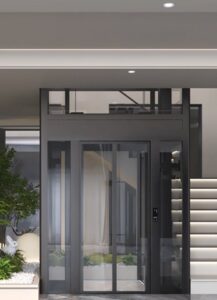
Space is the swing factor for many homes. If you have room for a small lift shaft or a free-standing structure tucked into a corner, under a void, or in a cupboard stack, you can gain full access between floors without altering the stair. Many modern residential lifts use compact drive systems, so you don’t need a separate machine room.
In apartments or terrace homes where every square metre counts, a stairlift leaves the floor plan untouched. The rail projects slightly into the stair width and a parked chair can fold to reduce obstruction. In narrow heritage stairs, make sure a folded chair still leaves safe walking clearance.
A lift gives interior design options. Glazed panels can bring daylight through floors, timber finishes can echo your joinery, and clean powder coated frames suit coastal conditions when the right grade is specified. A stairlift is more mechanical in appearance, though there are tidy, modern designs that keep visual clutter low.
Safety, reliability, and power cuts
New Zealand homes see storms and the odd outage. Both solutions handle power loss differently. Most quality stairlifts have battery packs that allow several trips when the mains drop. Many residential lifts include a battery-backed descent, so the car returns to the lowest level and releases passengers safely. That single feature removes a lot of worry.
Good lifts include multiple layers of protection. Door interlocks stop the car moving unless everything is shut. Overspeed devices monitor motion and intervene if needed. Backup braking systems add redundancy. Modern ride controls also limit vibration, so you don’t feel shakes through the frame.
Canny Residential Elevators includes these protections as standard, along with motion detection between doors and an anti-shake ride system that keeps movement smooth. Every model is type tested and built to meet or exceed NZ requirements, with certifications recognised worldwide.
Local servicing matters just as much. It’s comforting to know a trained technician can reach you quickly, carry the right parts, and stand behind the work. That’s especially important in remote rural spots and island communities.
Quick pointers when deciding
You can make a fast, confident choice by looking at who will use the equipment, how long you plan to stay, and what building work fits your life.
- You want wheelchair access: Pick a residential lift, it’s purpose-built for this.
- You need quick installation: A stairlift wins on speed with minimal disruption.
- You’re designing a new build: Plan a lift early, it future-proofs access without revisits later.
- Your stairs are very narrow: A lift may be safer, stairlifts need adequate walking clearance.
- You care about resale: A lift often adds broad appeal, while stairlifts tend to be removed.
- Budget is tight today: A stairlift gives an immediate solution with the lowest upfront cost.
Why many Kiwis are choosing Canny Residential
World-class engineering backed by local teams is an easy combo to trust. Canny Elevator Co. Ltd has operated since 1997, with more than 25 years of research and development, a dedicated R&D centre with over 500 engineers, and advanced manufacturing that supplies airports, hospitals, hotels, and homes. The brand ranks among the top global names and has more than 800,000 elevators installed across over 100 countries.
That scale translates into reliability, safety, and a supply chain that actually delivers. Models are certified to international standards, including CE, ISO, and TUV. For NZ homes, that foundation is paired with full compliance to the Building Code and council requirements.
Local support closes the loop. Canny Residential products are available nationwide through certified distributors and installers trained to the company’s global standards. You get site consultations, help with consent documentation, installation by crews who know NZ conditions, and long-term servicing with genuine parts. North Island, South Island, or a rural address off the beaten track, there’s help on hand.
A good warranty backs it up. Residential units ship with a one-year warranty that covers parts, labour, and installation, with extended options available. Maintenance plans keep your lift running crisply year after year, which is the easiest way to protect your investment.
What the process looks like in NZ
For new builds, the lift is a line item in the early design. Architects coordinate shaft size, pit depth or ramp solutions, power, and structure. Builders plan openings and sequencing so the lift install happens cleanly near the end of the programme.
In retrofits, a site visit maps structural options and services. A compact shaft can fit through wardrobes or linen cupboards, sometimes with clever offsets to avoid beams. If stairs are already a squeeze, a self-supporting structure can avoid heavy alterations and shorten install time. Consent requirements vary by council, but the right paperwork is routine for experienced teams.
Once the plan is set, the steps are predictable:
- Site consultation and measure
- Proposal, finishes, and technical sign-off
- Consent support and manufacturing
- Building prep, lift installation, testing, and handover
Keep an eye on access for delivery, protection of floors and finishes, and a clear path for final commissioning. A tidy install is a joy to watch, and a good handover teaches the family how to use features like child locks and emergency procedures.
Case snapshots that mirror real Kiwi homes
Multi-level townhouse in Auckland. A young family wanted pram-friendly access and a way for grandparents to move easily between the garage and living floors. A two-stop lift with a small glazed shaft near the stairwell solved movement without changing the layout. Energy use sits below a kettle on standby, and the cabin doubles as a dumbwaiter on grocery day.
Lifestyle block near Christchurch. A retrofit stairlift bridged a steep timber stair after a knee surgery. The rail followed the internal curve, the chair folds flat, and regular servicing keeps it ready. The owners plan to move before long, so the lower upfront cost made sense.
Heritage villa in Dunedin. Protecting original joinery ruled out heavy stair alterations. A discrete residential lift tucked into a corner of the rear extension gave wheelchair access to bedrooms and bathrooms upstairs. The finish repeats the villa’s white joinery with brass hardware, so it feels like it has always been there.
Energy, noise, and daily life
Modern residential lifts are quiet by design. With well-insulated shafts and precise guide systems, normal conversation carries easily in adjacent rooms. Stairlifts make a gentle hum as the chair moves along the rail, a sound most families forget after the first week.
Power use is modest for both. A short lift run draws less than many kitchen appliances, and standby modes reduce consumption when idle. In regions with more frequent outages, battery-backed functions keep both options useful. Lifts return to the lowest floor for safe exit, while most stairlifts keep running for several trips before charging resumes.
Kids, pets, and visitors adapt quickly. Safety sensors are there for peace of mind, and simple controls avoid confusion. Training during handover helps everyone feel comfortable before daily use begins.
Building for the long haul
Think beyond today’s needs. If you are building new, plan for a lift even if you will install it later. A framed shaft or stacked cupboards can turn into access in a weekend when you are ready. If you are retrofitting and the house will be passed down, the lift choice often suits multiple generations with different mobility needs.
If you expect short-term use or plan to sell soon, a stairlift is a great way to solve access fast without big changes to the house. The point is to keep you living where you want to live, on your terms.
Canny Residential Elevators supports both paths with NZ-wide site consultations, consent guidance, installation by trained local teams, and responsive aftercare. The mix of global engineering and local service means fewer surprises, cleaner installs, and reliable performance in the years ahead.
If you’re weighing up the options, start with a floor plan and a conversation. A quick measure, a realistic budget, and a sketch of how you live day to day will point you to the right answer. And once you’ve felt a smooth lift ride at home, the stairs start to feel optional.