

Many homeowners assume a residential lift only works in a large, custom-built house with room for a full shaft, major excavation, and weeks of disruptive building work. In practice, that is often not the case. Modern home lift systems can be fitted into surprisingly compact spaces, and in many homes the best location is already there, hidden in plain sight.
That matters in New Zealand, where homes vary widely in age, construction style, section size, and access. A villa renovation in Auckland, a new-build in Christchurch, and a hillside home in Wellington all call for different thinking. The good news is that a lift can often be added with far less structural change than people expect, provided the design starts with the right location and the right lift type.
Why some homes are easier than expected
The key question is not simply, “Is there enough room?” It is, “Can the lift travel between levels with minimal impact on the building’s structure?” That opens up more options than many people realise.
A number of residential lifts are now designed for retrofit situations. Some use self-supporting structures, some need only a shallow pit, and some can pass through a simple floor opening rather than a conventional masonry shaft. When the lift system carries much of its own load, the amount of structural work around it can drop sharply.
In practical terms, the lowest-impact installations tend to share three traits. They sit close to existing circulation spaces, stack neatly between floors, and avoid major interference with critical structural elements.
After looking at the floor plan, these are often the first places worth assessing:
- Stair voids
- Stacked cupboards or wardrobes
- Corners beside a foyer
- Garage to upper landing zones
- Exterior wall positions
- Unused double-height spaces
Low-impact locations that often work well
A stacked cupboard arrangement is one of the most efficient options in a retrofit. If a cupboard on the ground floor lines up with a cupboard, study nook, or spare storage space above, the lift footprint may fit into that vertical line with limited reworking. The benefit is obvious: the space was already enclosed, already part of the interior plan, and often away from the home’s main living zone.
The area beside or within the stairwell can also work very well. Many homes have underused space near the stairs, especially where there is an open stair void or a wide landing. Because stairs already connect levels, placing a lift nearby keeps movement around the home intuitive. It can feel like a natural extension of the circulation path rather than an add-on.
Garages are another strong candidate, particularly in homes where the garage sits below the main living level. A lift can rise from the garage into an entry hall, mudroom, or landing above. This setup is popular because it protects interior living areas from major disruption and can make day-to-day living far easier, especially when carrying groceries, luggage, or mobility equipment.
An exterior wall installation is often overlooked, yet it can be one of the smartest solutions when indoor space is tight. In some cases, a lift shaft or glazed enclosure can be added outside the home and connected through new door openings at each level. That can reduce internal demolition and preserve the existing floor plan.
A quick comparison of common install positions
The right spot depends on the home’s layout, the lift model, and how the household wants to use it. A simple comparison helps narrow the field.
| Location | Structural work usually required | Best suited to | Main trade-off |
| Stacked cupboards | Floor openings, local framing changes, finishing work | Compact retrofits | Storage space is lost |
| Stair void or stair-adjacent area | Floor opening, possible balustrade and stair alterations | Homes with generous stair geometry | Design needs careful safety detailing |
| Garage to landing | Penetrations between garage and upper level, fire and finishing requirements | Split-level and raised homes | May require weather-tight transition planning |
| Exterior wall | New openings, external shaft or enclosure, foundation support | Homes with limited internal room | Visual impact on exterior |
| Corner of foyer or living area | Floor opening and architectural integration | New builds or larger homes | Takes visible floor area |
| Double-height space | Platform structure, upper-level access formation | Architecturally open homes | Best outcome depends on layout symmetry |
What makes a location “low impact”
Low impact does not mean no building work. It means the work is contained, predictable, and focused on a small part of the home rather than spread through several rooms.
The first factor is load path. If the lift system is self-supporting, the house may not need to carry all the vertical loads in the way a traditional shaft would. That can reduce the amount of new framing and engineering intervention.
The second factor is floor penetration. Creating a neatly framed opening through one floor is very different from rebuilding large sections of a home. A compact lift with a modest footprint can often fit between existing spaces without forcing a major room redesign.
The third factor is services and access. Plumbing stacks, electrical runs, ventilation ducts, and fire separation requirements can all affect the final location. A spot that looks simple on the plan may become more complicated if vital services run through it. By contrast, a garage corner or cupboard stack may be much cleaner to work with.
A good early assessment usually weighs these points:
- Structure: how much new support is needed around the opening
- Footprint: whether the lift car size suits daily use without dominating the room
- Access: clear entry and exit at each level
- Services: whether pipes, wiring, or ducts need relocating
- Consents: the likely council pathway and code requirements
- Finish: how naturally the installation sits within the home’s style
Choosing the right lift format
The location and the lift type must be matched. A poor match can turn a simple project into a highly invasive one, while the right match can make the lift feel as though it was always part of the home.
Through-floor lifts are often considered when the priority is minimum footprint and fast access between two levels. They can suit homes where there is a practical stacked position and where a full shaft is unnecessary. Their appeal lies in simplicity, though they are usually best for two-storey travel rather than more complex arrangements.
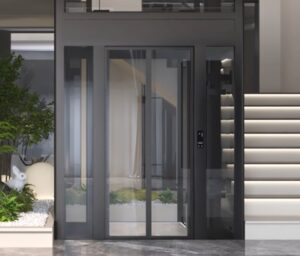
Self-supporting enclosed lifts offer a different balance. They provide a more conventional lift experience while still avoiding some of the heavy structural demands associated with older lift designs. In many homes, this style works well in stair-adjacent spaces, living area corners, or garage-to-house transitions.
External shaft systems come into their own when internal planning is tight or the home’s layout is already finely tuned. Rather than forcing the lift into a compromised interior position, the design shifts outward and connects back into the house where access is most useful.
A practical shortlist often looks like this:
- Through-floor lift: ideal when two levels are involved and the available internal space is small
- Self-supporting residential elevator: a strong option for homeowners wanting a more enclosed, premium feel
- External lift tower: useful where preserving internal rooms matters more than changing the façade
- Platform lift for short travel: suited to small level changes or specific accessibility zones within a home
New builds versus retrofits
New homes have an obvious advantage: the lift can be planned before the slab is poured and before framing begins. That allows the design team to reserve space, coordinate structure, and prepare electrical and access requirements from the outset. Even if the lift is not installed straight away, many homeowners choose to future-proof the home by creating a stacked cupboard arrangement or a lift-ready void.
Retrofits require more careful detective work, though they are often very feasible. The process starts with measured drawings, a site visit, and a close look at floor framing, ceiling space, and the path between levels. What matters is not whether the home is old or new, but whether there is a practical vertical route with manageable modifications.
Some older New Zealand homes can actually be easier to adapt than expected. Generous ceiling heights, simpler plan forms, and useful storage stacks can create opportunities. Others can be more challenging because of tight framing, irregular additions over time, or access restrictions around the site.
That is where experienced local support becomes valuable. A globally proven lift system is important, yet so is having installers and advisers who know local construction methods, council expectations, and the realities of working in homes from Kerikeri to Queenstown.
New Zealand factors that shape the design
Local building conditions matter. Seismic performance, weather-tightness, timber-framed construction, and site access can all influence where a lift should go and how it is detailed.
In hillside suburbs, external placement may be attractive, though wind exposure and waterproofing need careful treatment. In dense urban areas, internal installations can be easier to consent and protect privacy better. In rural settings, access for equipment and trades may affect programme and cost.
Safety expectations are also high, and rightly so. Homeowners are not just buying convenience. They are investing in daily confidence for children, older family members, and anyone with reduced mobility. Features like motion detection between doors, overspeed protection, emergency battery-powered descent, door interlocks, backup braking systems, and anti-shake ride control make a real difference to peace of mind.
This is one reason established engineering matters. Canny Elevator Co. Ltd, founded in 1997, has installed more than 800,000 elevators worldwide and is present in over 100 countries. Its residential range is backed by international certifications including CE, ISO, and TUV, while New Zealand delivery is supported through local distributors and installers trained to the required standards. That mix of global engineering and local expertise gives homeowners a practical path from design advice through to servicing and parts support.
What a site consultation usually checks
A proper site consultation is where the idea becomes real. It confirms whether the preferred location is genuinely low-impact or only seems that way on paper.
The first check is the vertical route. Can the lift travel cleanly from one level to the next without crossing structural obstacles that would push the project into major rebuild territory? The second is access. Are the arrival points at both levels convenient, safe, and wide enough for the intended users? A lift that lands in awkward leftover space is rarely the best answer, even if it fits technically.
Then comes compliance. New Zealand homes need lift solutions that fit the Building Code, safety rules, and council requirements. That includes the details people do not always think about at first, including fire separation, power supply, emergency operation, and the way the lift interacts with doors and circulation spaces.
One more point matters just as much as engineering: long-term support.
A lift is part of daily life, not a one-off building feature. Ongoing servicing, responsive aftercare, and reliable parts supply are essential. When local teams can provide site consultations, installation, consent guidance, and maintenance backed by a globally trusted manufacturer, homeowners can make decisions with far more confidence.
That is often the difference between forcing a lift into a house and fitting one properly into the way the home is meant to work.