

Looking at ways to make multi-level living easier with home elevators is no longer only about accessibility. Kiwi homeowners are choosing lift solutions that improve day-to-day life, support ageing in place, and add value to carefully designed homes. Two options lead most shortlists: a fully enclosed residential elevator and a vertical platform lift, both of which are types of residential lifts. They both move people between floors, yet they suit different objectives, needs, and build constraints.
The conversation around home lifts has shifted. What was once seen as a retrofit for medical necessity is now planned into new builds from the outset. Young families recognise that stairs become harder over time, elderly parents visit more often, and life is simply easier when groceries, laundry, and luggage don’t need to be hauled up and down. A well-chosen lift system becomes part of the home’s rhythm, working quietly in the background while the household carries on.
Yet not all lifts work the same way. The decision between a residential elevator and a platform lift affects everything from construction timelines and building consent requirements to daily comfort and long-term flexibility. One offers speed, design integration, and multi-user convenience. The other delivers targeted accessibility with minimal structural disruption and faster installation. Both have merit. Neither is universally better. The right answer depends on how your household lives, how your home is built, and what matters most when you picture the next decade under that roof.
Getting this choice right early saves time, simplifies building consent, and avoids compromises later. It also shapes the feel of your home, from how quietly you glide between levels to how much space you reclaim for living. This guide walks through the practical differences, helps you weigh your priorities, and points to the solution that fits your situation.

Understanding the two lift types
Both systems move at modest speeds suitable for homes. Both must comply with New Zealand safety standards and local council requirements. Each has valid use cases.
Where they diverge is how they are built, how they are used, and how they look and feel in daily life.
Domestic elevators at a glance
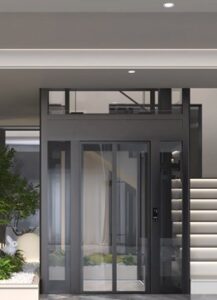
A domestic elevator is an enclosed car that travels inside a shaft. It has automatic operation, full-height doors, and a refined ride. Many models sit comfortably in high-end architecture, where finishes and silence matter as much as function.
Because the cabin is enclosed and the doors are interlocked, operation is simple. Press the destination button, the doors close, and the system does the rest. Travel height can span multiple floors, and you can customise car size, finishes, and lighting to suit the interior palette.
Space and structure do come into play. Most elevators require a shallow pit below the lowest floor and overhead space at the top. New build designs can factor these dimensions in from the start. In a retrofit, the design team may rework joists or create a small extension to meet pit and headroom needs.
When built well, a residential elevator becomes invisible to everyday noise. With quality rails, balanced drive systems, and vibration control, the cabin simply arrives. That is one reason many families choose an elevator even when the project started as an accessibility upgrade.
Platform lifts in practice
A vertical platform lift is often open on one or more sides and uses constant-pressure controls. Keep the button pressed and the platform moves. Release it and the system stops. The travel height is usually shorter and the speed is lower than an elevator.
For single or two-stop access, especially for wheelchair use, a platform lift can be a tidy solution. Pit requirements are typically modest, doorways can align with existing thresholds, and the device can sit indoors or outside. That makes it well suited to retrofits in tight spots, heritage homes with limited structural change, and short flights connecting a garage to a main floor.
Because platform lifts are mechanically simpler, procurement and installation time can be shorter. They are usually more cost effective upfront, which often unlocks accessibility in homes where budgets are already stretched by other upgrades.
Side-by-side comparison
The table below summarises practical differences that matter on real projects.
| Aspect | Residential elevator | Platform lift |
| Typical use | Daily multi-level movement for all occupants | Targeted access for a mobility aid user |
| Operation | One-touch automatic control | Constant-pressure control while travelling |
| Doors | Full-height automatic sliding or swing doors | Manual or powered gates, often half-height |
| Travel | 2 to 5+ stops, greater travel height | 1 to 2 stops common, shorter travel |
| Speed | Faster, smooth cabin ride | Lower speed by design |
| Shaft | Full shaft or modular hoistway | Often self-supporting or partial shaft |
| Pit/overhead | Usually required | Often minimal pit, reduced overhead |
| Footprint | Larger, but customisable cabin sizes | Compact, suits tight spaces |
| Aesthetics | High integration with interior finishes | Functional, clean lines |
| Noise | Quiet with proper isolation | Modest mechanical noise |
| Power | Single or three phase depending on model | Typically single phase |
| Installation time | Longer, more builder coordination | Faster, fewer building works |
| Compliance | AS/NZS 1735 series, NZ Building Code | AS/NZS 1735 series, NZ Building Code |
| Cost range | Higher upfront investment | Lower upfront investment |
| Maintenance | Regular servicing for longevity | Regular checks, simpler systems |
| Resale impact | Strong design signal in premium homes | Clear accessibility value |
Every line in that table is general guidance. Exact requirements depend on the site, the product, and the consent authority.
Quick decision checklist: Which lift suits your home?
Use this checklist to clarify your priorities in under five minutes.
Your situation (tick all that apply)
Users and access needs:
- ☐ Wheelchair user now or within 5 years
- ☐ Multiple household members will use daily
- ☐ Need to move groceries, laundry, bulky items regularly
- ☐ Primarily one person with mobility limitation
- ☐ Temporary need (post-surgery recovery, short-term)
Your property:
- ☐ New build or major renovation underway
- ☐ Existing home, minimal structural change preferred
- ☐ Heritage or character home with constraints
- ☐ Outdoor access needed (street to main entry)
- ☐ Very limited indoor floor space
- ☐ Room for enclosed shaft (cupboard stack, beside stairs)
Timeline:
- ☐ Need installation within 3 months
- ☐ Flexible timeline (6+ months acceptable)
- ☐ Part of larger building project
Priorities:
- ☐ Quiet, refined ride quality matters
- ☐ Design integration with interior important
- ☐ Fastest, simplest installation preferred
- ☐ Long-term home (staying 10+ years)
- ☐ May sell within 5 years (resale value matters)
What your answers suggest
Platform lift is likely best if you ticked:
- Need installation within 3 months
- Minimal structural change preferred
- Outdoor access needed
- Primarily one wheelchair user
- Short vertical travel (single floor)
Residential elevator is likely best if you ticked:
- Multiple household members using daily
- Move goods frequently between floors
- Room for enclosed shaft available
- Design integration important
- Staying long-term (10+ years)
- New build or renovation underway
Mixed results? Book a site consultation. A specialist can assess structural options, confirm timelines, and recommend the right solution for your specific home.
What matters during design and consent in NZ
New Zealand homes come with unique conditions. Coastal environments introduce corrosion risks. Hill sites face more wind and seismic considerations. Older villas bring heritage character and fragile structures that deserve respect.
Engage the builder, the lift supplier, and an engineer early. Agree on pit depths, overhead clearances, power supply, and wall build-ups before the consent drawings harden. Doing this prevents clashes on site and makes the council process smoother.
Attention to acoustics pays off. Even quiet systems benefit from rubber isolation between machine and structure, and thoughtful placement away from bedrooms.
Weather exposure matters too. Outdoor platform lifts need the right coatings, drainage, and protection from salt spray. For elevators near the coast, stainless fixtures and sealed components help keep things pristine.
Safety tech that makes a difference
Both solution types are built around safety, though the feature sets differ. For families, knowing what to look for during specification helps separate marketing from engineering.
- Motion detection between doors: mitigates risk if something enters the threshold at the wrong moment
- Overspeed protection: independent monitoring that intervenes if travel speed exceeds limits
- Emergency battery-powered descent: controlled lowering to the nearest level during a power cut
- Door interlocks and backup braking: redundant systems that only permit movement when secure
- Ride stability systems: rails and control algorithms that reduce sway and vibration
Canny’s residential range includes these protections as standard. The company’s lifts undergo rigorous testing against international benchmarks and are supplied to airports, hospitals, hotels, and homes around the world. That pedigree shows up in day-to-day reliability.
Two real-life scenarios
A family in Wellington designed a three-storey home around views. Stairs worked fine for a few years, then a knee injury made daily trips painful. They chose an enclosed elevator during a renovation, planning for ageing in place and adding a stop for a future home office in the attic. A shallow pit and compact machine room were allowed for during structural works. The lift now runs near-silent beside the main stair, with timber finishes matching the interior.
In Christchurch, a single-level entry sits above a garage. The brief was straightforward: roll a wheelchair from the car to the living room without altering the heritage façade. A compact platform lift made that possible. Minimal pit depth, constant-pressure controls, and a weather-protected landing solved access without shifting floor levels or cutting into existing joists. The device sits neatly in a side return, with powder-coated gates to suit the cladding.
Both households made good choices, tailored to the purpose. Both gained independence and comfort.
Why engineering and local expertise matter
What to look for in a lift supplier
Beyond the product itself, your choice of supplier affects the entire ownership experience. Consider these factors:
Manufacturing quality: Established manufacturers with dedicated engineering teams typically offer more reliable products and better long-term parts availability. Look for international certifications (CE, ISO, TÜV) that indicate independent testing and quality systems.
Local installation expertise: Your installer should understand New Zealand Building Code requirements, coordinate effectively with architects and builders, and tailor solutions to local conditions—from coastal corrosion to seismic considerations.
Aftercare infrastructure: Confirm the supplier has service teams in your region, clear warranty terms, and documented response times. Rural properties should verify coverage extends beyond main centres.
Canny Residential Elevators operates through a network of certified NZ installers and service teams, with products meeting relevant AS/NZS 1735 standards and Building Code requirements.
A quick way to get started
If you are weighing options, bring a few basics to an initial chat:
- Floor-to-floor heights
- Preferred lift location
- Number of stops
- Power supply and switchboard capacity
- Any mobility considerations
- Timing for consent and build
With those details, a specialist can map the right solution and outline costs and timelines with far more clarity.
Great lift choices, including home elevators, bring freedom to every level of the home. With proven engineering and NZ-wide support wrapped around the experience, moving up feels simple.
Making the choice that works for your home
Choosing between a residential elevator and a platform lift comes down to how you live, how your home is built, and what you need from vertical access over the long term. Both are proven solutions. Both meet New Zealand safety standards and building requirements. The difference lies in daily experience, structural demands, and how well each option aligns with your household’s rhythm.
Domestic elevators excel when multiple people share the home, when design matters as much as function, and when you want seamless movement between floors without compromise. They carry people, goods, and mobility aids with equal ease. They integrate into architecture rather than sitting alongside it. They run quietly, operate automatically, and feel like a natural part of the home from day one. For families planning to stay put, for new builds with space designed in early, and for homes where accessibility may expand over time, a residential elevator often proves the smarter long-term investment.
Platform lifts solve a different problem well. When the need is focused, the budget is defined, and structural change must stay minimal, they deliver targeted access efficiently. They work indoors and out, handle short vertical runs with ease, and can be installed without reshaping floor plans. For single-user accessibility, tight heritage retrofits, or situations where time and disruption matter most, a platform lift gets people moving between levels without delay.
Neither choice is wrong. The right answer depends on your home, your needs, and your vision for the next chapter of life under that roof. Walk through the checklist, measure your priorities, and talk to a specialist who understands New Zealand builds. With clear information and honest assessment, the decision becomes straightforward.
Great domestic elevators and platform lifts both bring freedom to multi-level homes. Choose the one that fits, install it well, and enjoy the ease that comes with effortless movement between floors.